Saturday, February 11, 2023

Lake Kissimmee State Park, FL

Lake Kissimmee State Park is a 5,930 acres park approximately 2 hours south of Orlando. The park is surrounded by three lakes (Roselie, Tiger, and Kissimmee) and collectively are known as the headwaters of the Everglades. The state purchased 5,030 acres in 1969 from the William Zipperer estate. The park opened to the public in August 1977. In 1997 an additional 900 acres was purchased on the western boundary.

Lake Kissimmee State Park offers an abundance of outdoor activities including boating, canoeing, fishing, hiking, biking, and trails. The park has a 60 site campground all with water /electricity and 2 primitive sites. A dump station is conveniently located near the campground. Interior roads are paved and most sites are nicely shaded.

There is an abundance of wildlife which became quite evident early on. A white tailed deer greeted us as we were backing into our site. On a bike ride later that day I saw a plethora of birds and a bobcat ran down the road in front of me. 


During the Civil War the area was used to raise cattle. They would be shipped to the confederate army and/or traded to Cuba for supplies. A 1876 cow camp demonstrates the history and life of the early Florida cow hunter. Open on Saturdays from 10 am to 4 pm.


Resurrection Fern
Lake Kissimmee State Park has 5 well marked multiuse trails with a distance of over 20 miles. The Gobbler Ridge Trail, a 2.8 mile round trip trail starts at the main parking lot and leads to the observation tower. It's an easy trail to walk, riding a bike is a little more difficult due to white sand and very wet areas near the lake. The tower was blocked off half way up but I could still get a good idea of what the area is like. It is marked by green hash marks on the trees.
Lake Kissimmee
Florida Box Turtle

Nine-Banded Armadillo
Lake Kissimmee

The Buster Island Loop is also a well marked 6.7 mile multi use trail that is an actual island. It is marked with white hash marks on trees. The trail starts at the Zipperer canal bridge and meanders through live oak forest.
Almost drove over this little guy on my bike
Even though this trail was well marked somehow I lost it and ended up on the red trail which is the equestrian trail. It all ended well. I rode back to the trailer for some much needed lunch. Because this is our last day at Lake Kissimmee I wanted to explore the last remaining trail. So after a very short nap I set out for the 6 mile Kristin Jacobs or yellow trail.
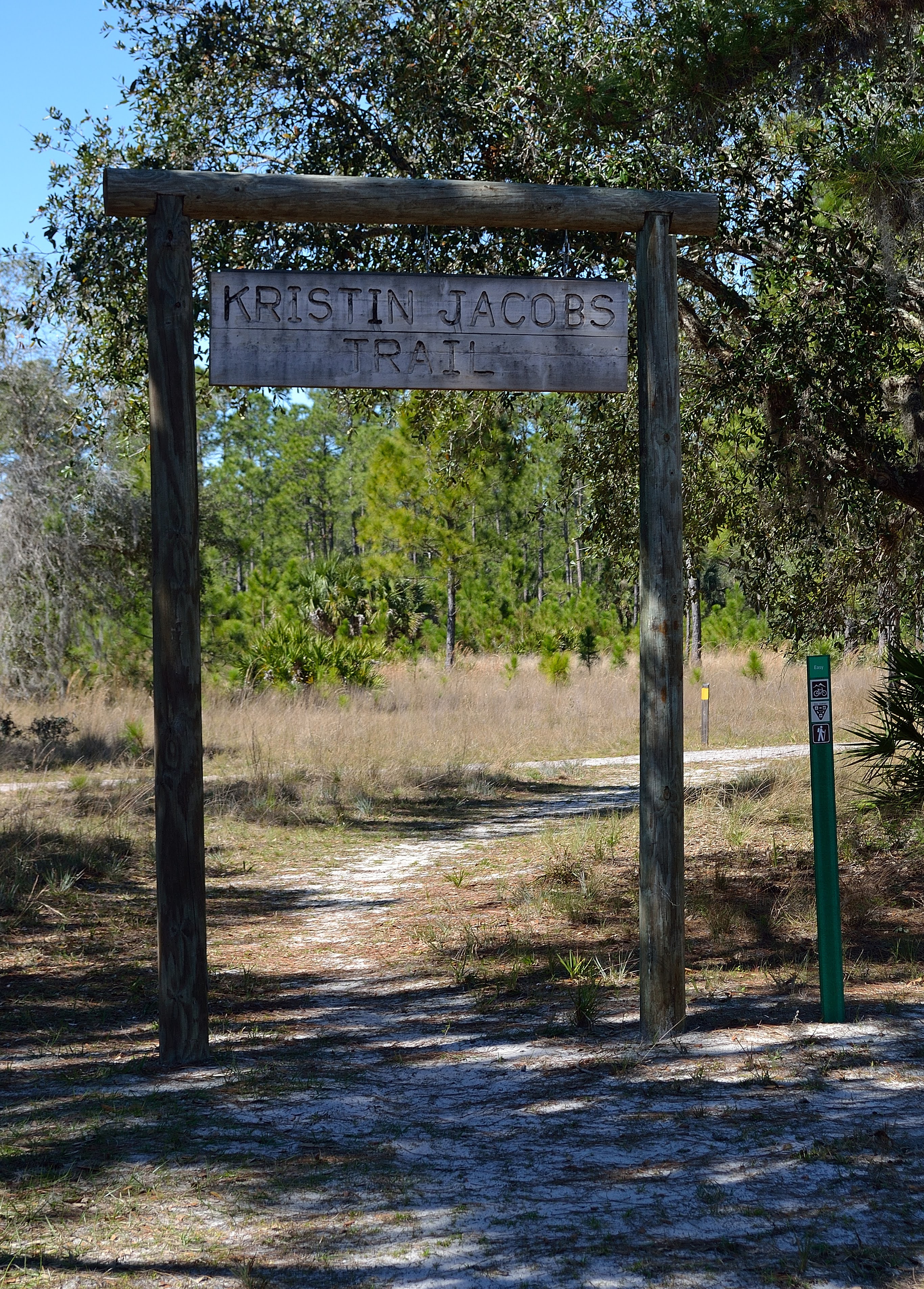
Someone found time to make this
I have to admit there was some apprehension about this park. The reviews were not great. The biggest complaint was the constant airboat noise. During our four days I heard only two airboats and they were the sheriffs department doing patrols out on Lake Kissimmee. It was so peaceful you could hear yourself think. How nice is that. Another fantastic state park explored.

Friday, November 4, 2022

Fort Boonesborough State Park

The second leg of our adventure south took us further down the I-75 through Cinninnati, Lexington, and into Fort Boonesborough State Park which is near Richmond, KY. It was  a little on the cool side but that didn't matter cause it was a beautiful sunny day. The trip is just over 222 miles or 358 km and took about 5 hours with a couple of stops for the dogs and some much needed stretching exercises.

We arrived to the park and was greeted by a campground host singing Christmas carols. I guest you can never be too early for Christmas. We found our site got parked and set up.

We are only here for one night so I have some exploring to do. Fort Boonesborough State Park is located on the banks of the Kentucky River. The campground is open year round and offers 166 sites that range from water and electricity to 18 full hook-up sites. The primitive area is closed indefinitely due to major flooding last year. The park hosts several functions throughout the year in a large activities building. Service buildings provide showers, restrooms, and laundry facilities. They are quite dated but very clean. The park provides WiFi but I was unable to get on. The campground store is well stocked with the essentials including ice cream, groceries, and souvenirs. A short walk from our site is an 18 hole mini golf course equipped with lights for playing in the evenings. The cost is $4.50 adults and $3.50 children.

Kentucky River

Campground Store

Miniature Golf Course

One of Three Picnic Shelters

Fort Boonesborough was the final terminus for Daniel Boone and his band of trail blazers as they carved out a trail that became known as Boone Trace. This trail was only large enough for those travelling by foot or horseback. Boone and his party of early settlers arrived in April 1775. Their preliminary camp was a site called Sycamore Hollow near the Kentucky River.

Sycamore Hollow

Three weeks later when Richard Henderson arrived it was decided to move the camp to higher grounds close to where the permanent fort was constructed. Boonesborough was chosen because of it's close proximity to the Kentucky River. A rock wall marks the site of the forts first position. By late 1775 Fort Boonesborough consisted of 26 one story log cabins laid out in a rectangular shape with a blockhouse in each corner.

Footprint of Fort Boonesborough

Rock Wall
A replica of the fort was build about 0ne-half mile away and is open to the public. However, it closes for the season on 1 November and reopens 1 April the following year. As my walk was coming to an end I noticed a number of other sites in the park. All in all it is a great place to stay for one night or several. We will definitely stay here again.


Thursday, November 3, 2022

Bicycle Museum of America

After visiting the Miami-Erie Canal system we made the very short walk around the corner to the bicycle museum. With over 150 bicycles on display and 800 in their collection, the Bicycle Museum of America located in New Bremen, Ohio is a must see if your into bikes. And even if you're not you will walk away with the history and knowledge of the first and newest bicycles ever made.

The museum is located in a 3 story building and cost us $2 each (senior rate of course lol). Allow at least 1-2 hours to see all the exhibits. There is a fully stocked gift shop at the end of the self guided tour just in case you want to purchase a keepsake.

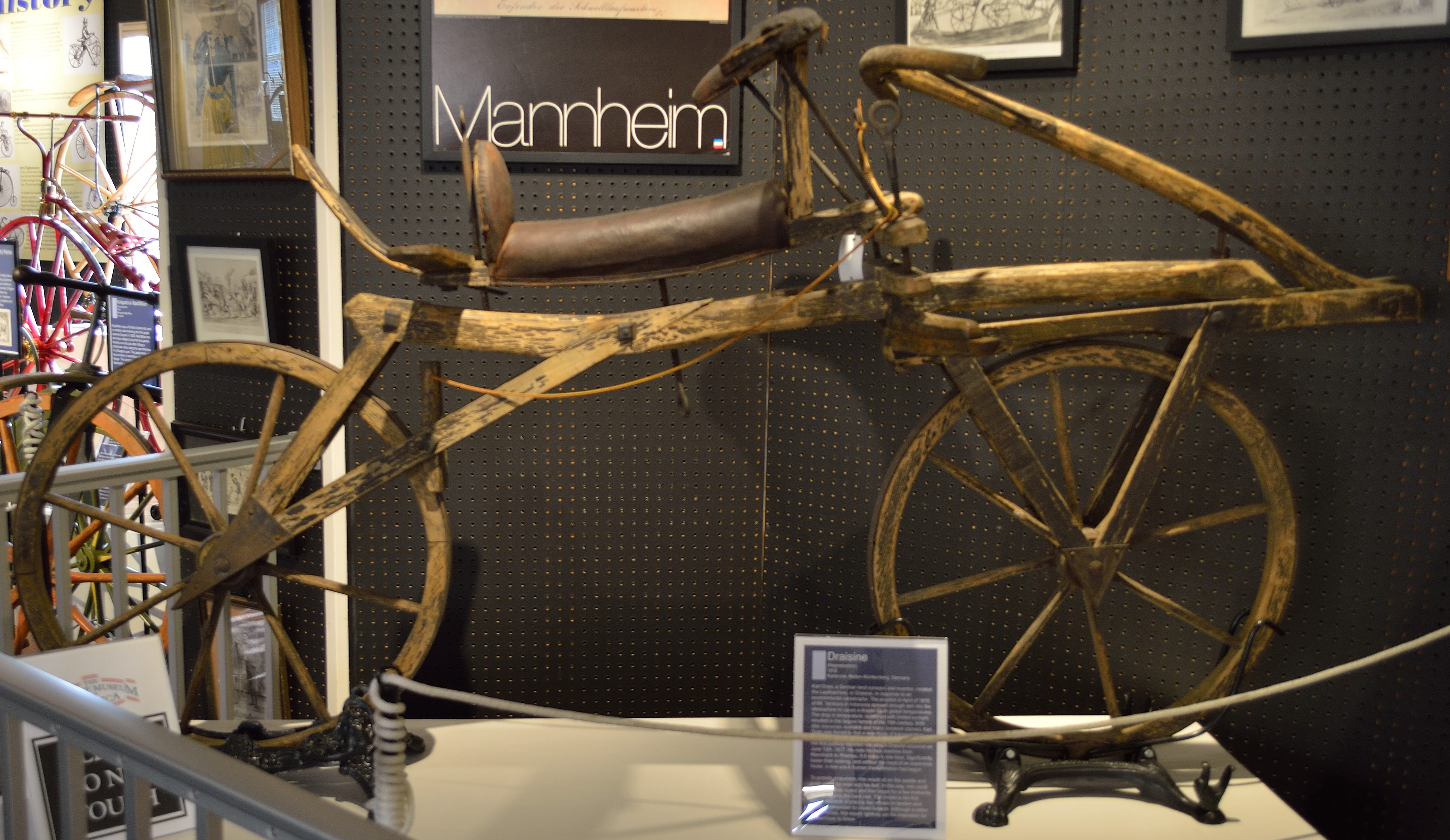
One of the very first exhibits is the Laufmachine or Draisine built in 1816 by Karl Drais a German land surveyor and landowner. He built this machine in response to an environment catastrophe. In April 1815 Mt Tambora in Indonesia erupted spewing enough ash into the atmosphere to cause a dramatic dip in the global temperature. A drop in temperature and limited sunlight created the largest famine in the 19th century. With limited resources and starving livestock Drais was forced to find another means of transportation. The Draisine was publicly ridden for the first time in 1817 a distance of 8.6 miles in one hour. For propulsion Drais sat atop the saddle and used his feet to push along the road to gain speed. 


Having fun at the bicycle museum is what it is all about. Here I'm sitting on top of an 1875 Ariel. The Highwheeler began in the 1870's with James Starley making a light weight, hollow steel frame, and rubber tire bicycle. The large front wheel acted as a gear ratio. The larger front wheel meant more ground was covered with each rotation of the pedals. The pedals were still attached directly to the wheel which provided a much smoother ride than its predecessor. Sudden stops often resulted in a head-first dismount. The Highwheeler was also called the Pennyfarthing or the Ordinary.
It was fun but very very hard on the butt

The Shawmut racing safety bicycle (1913) below is in it's original condition and has never been uncrated. This is how most bikes were shipped during the early 20th century.


In the 1940 Benjamin Bowden designed a futuristic looking lightweight aluminum bicycle he called "the Classic". It initially created substantial public interest however British bicycle manufacturers were reluctant to invest due to the high degree of retooling needed to produce it.


In an attempt to make the bicycle a year mode of transportation in 1901 a kit was designed to convert the front wheel to a sled runner. The rear wheel was drilled to accommodate large studs. Today there are bikes with larger studded tires that allow riding on ice and snow. 

The military first introduced bicycles in their infantry in the late 19th century. The expensive breeding of horses for the cavalry became burdensome. The bicycles offered an inexpensive, yet silent movement on the battlefield. 

The Maxim Machine Gun Tandem Tricycle was developed by Hiram Maxim in 1901. Due to their heavy weight moving the guns were not an easy task. The tricycle was developed with two Maxim machine guns and tripods for stability when firing. This was impressive but impractical due to the shear weight of both guns...374 lbs. This made it extremely difficult to move uphill or across rouged terrain. Consequently, the bicycle was rarely used. 


With many, many bikes on display I couldn't blog on them all but one particular bicycle did catch my eye. The banana seat high-rise handle bar bike was first developed by Schwinn of Chicago Illinois in the 1960s. Yes, I had one as a kid, I love it, and rode it until it fell apart.


We spent about 1-1/2 hours looking at bicycles and could have spent another hour or so. We had to call it only because we had a tour of the Airsteam factory to get to just down the road.