Visited: 1 - 3 October 2024
Nights Stayed: 2 nights
We left home on route to Amana, Iowa but our first stop was Indiana, an area known for it's 45 miles of pristine shoreline along Lake Michigan. Also well known in the area is Indiana Dunes State Park (which is where we are camping) and Indiana Dunes National Park.
Firstly, Indiana Dunes State Park is surrounded by Indiana Dunes National Park. The state park consists of over 2,100 acres of beautiful pristine and historic landscape. In the early 1900 the area was recognized for its potential thereby being established as a state park in 1925. Large sand dunes located beyond the shoreline have taken thousands for years to form.
The state park which is open year round has a campground with 140 campsites offering both primitive or sites with power. The visitors center has natural and historic displays, an area for observing birds and other critters. The park also offers more than 16 miles of hiking and biking trails.
 |
| Our campsite #36 |
 |
| Visitors Center |
 |
| Large sand dunes |
 |
| Beautiful Lake Michigan |
 |
| Beautiful Lake Michigan sunsets |
Indiana Dunes National Park, a federally administered park consists of over 15,170 acres and spans across 15 miles of Lake Michigan shoreline. The NP is located about 50 miles southeast of Chicago. It was established as a national lakeshore in 1966 but renamed as a national park in 2019.
The NP campground consists of 66 unserviced campsites and modern restrooms with hot and cold showers. It is open from 1 April to 1 November and closed during winter months. With over 50 miles of trails there is an opportunity to explore this ever changing landscape. In many area the huge living or moving dunes are slowly being blown inland burying the forests as they go.
Mount Baldy Beach Trail
Hike Time: .75 miles, 75 feet of elevation gain, about 1 hour
Mount Baldy is 126 feet above the water level of Lake Michigan and is moving inland at a rate of between 4-7 feet per year. The beach sand on the dunes moves when the prevailing northwest wind exceeds 11 km per hour. Because there is no sand collecting on the waters edge this worsens the movement of Mount Baldy. Beach erosion takes away more sand from Mount Baldy than the waves are bringing in. Much of this is caused due to the breakwall built for Michigan City Harbour. The Army Corp of Engineers began feeding the beach in 1974 to try and correct the effects of the breakwall.
 |
| Aerial View of Mount Baldy courtesy of NPS |
The Mount Baldy Trail Hike in an out and back trail considered to be a moderately challenging route. The trail features a staircase at the start and sweeping views of Lake Michigan near the end. Walking down to the beach on loose sand was a test but coming back up was where the challenge was.
Bailly Homestead, Chellberg Farm, and Cemetery Trail Loop
Hike time:1.6 miles, 2.5 kms 1.5 hours
The Chellberg Farm was established by Anders and Johanna Chellberg whom moved from Sweden to this area in 1863. In 1869 they purchased 40 acres of land thereby creating the homestead. In 1874 an additional 40 acres was added. The brick farmhouse was built in 1885 after the wood framed house was destroyed by fire 1884. They were the first of 3 generations to live on this land. Continuing along the trail we found the Bailly Homestead which was declared a National Historic Landmark in 1962. This was the home of French Canadian fur trader Joseph Bailly from 1774-1835 who was one of the earliest settlers in northern Indiana. Bailly was an independent fur-trader who's business spread from Montreal to Louisiana.
The Bailly Cemetery is located 3/4 miles away from the homestead on the edge of a sandy ridge. In 1827 Joseph Bailly chose this area for the resting place of his young son. The entire Bailly family is interred in this cemetery.
A Century of Progress - 1933 World's Fair Homes

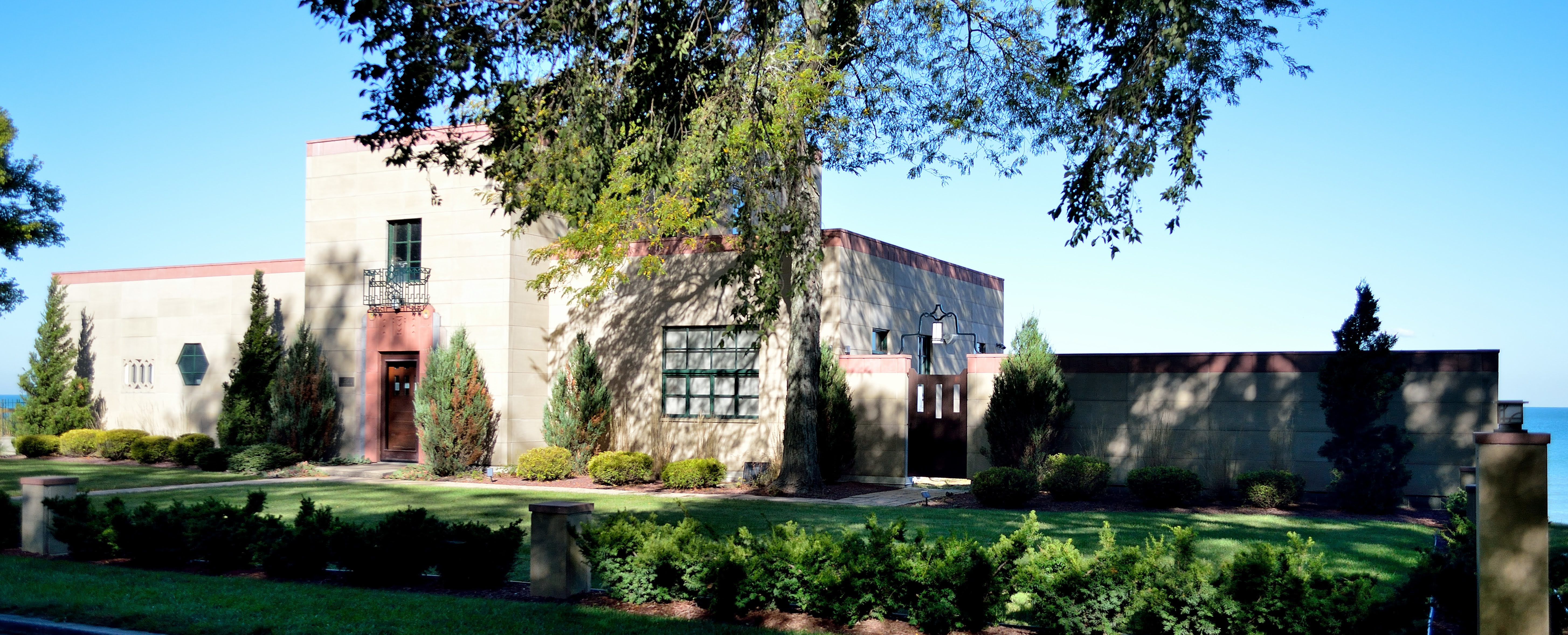
I bet you are wondering what Indiana Dunes National Park and the 1933 World's Fair has in common...well let me tell you the story. In 1933 the World's Fair which was held in Chicago was called the Century of Progress. It was meant to offer people who were in midst of the Great Depression hope through futuristic changes. The houses were built in such a way they demonstrated modern architectural design, experimental materials, and new technologies such as central air conditioning and dishwashers. In 1935 real estate developer Robert Bartlett bought 5 homes from the homes and industrial arts exhibit at the world's fair. Four of these homes were transported via barge to their new location across Lake Michigan to Beverly Shores, a resort community he was developing. The fifth house was dismantled, trucked to Beverly Shores where it was reassembled. Today, the structures are leased by Indiana Landmarks from the National Park Service, then subleased to people who have restored them in exchange for long-term leases.
The Florida Tropical House was the only state sponsored Century of Progress home, it was commissioned by the state of Florida to lure tourists to "the Sunshine State". The centerpiece of the house is the two-storey living room with an overhanging balcony. The original residence cost $15,000 to build.
The Armco-Ferro House was manufactured for $4,500 by Insulated Steel Inc for American Rolling Mill Company(ARMCO) and the Ferro Enamel Corporation. This was the first to be constructed using frameless steel construction and an exterior of vitreous enamel. It only took five days to construct the 2,400 square foot from prefabricated panels. This home could be mass produced and also be affordable for an American family.
The Wieboldt-Rostone House showcased an exciting new building material that "never needed repairs". The material composed of limestone, shale, and alkali. However, the lake effects of snow, wind, and rain proved to be to much for the Rostone causing severe deterioration by the 1950's. The Rostone has subsequently been covered with Perma-stone, a popular concrete stucco.
The Cypress Log Cabin was unlike the other ultra-modern homes made of steel, stone, and glass, it showcased cypress logs which are resistance to water and decay. The architect showed the wood's versatility and durability by incorporating cypress siding, shakes, structural timbers, walls, flooring, and furniture.
The House of Tomorrow's first floor was designed as a service area, originally containing the garage and an airplane hangar. The second and third floors clad in glass contained the main living spaces and a solarium. Because of the floor to ceiling windows the heat loss during the winter months was negated by the solar heat gain reducing the need for mechanical heating. However, the heat gain during the summer months was too great for the air-conditioning and it failed. When Bartlett moved the building he replaced the windows with operating ones to allow air-flow.
Indiana Dunes State Park and National Park did not disappoint. With the copious trails to hike, the beautiful beach to walk, the numerous historic buildings to explore, and to end the days with gorgeous sunsets to enjoy, we will make this place a regular stop.
If you enjoyed this blog please feel free to leave a comment or follow my blogs.